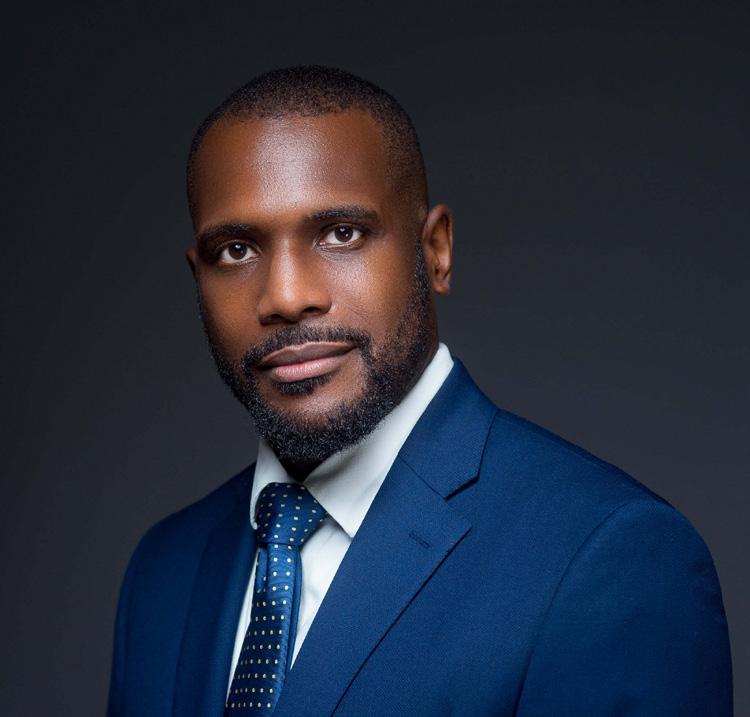


A University lecturer has renewed calls for fixed election dates and term limits, arguing that Barbados must confront deeper constitutional reform issues following the Barbados Labour Party’s third consecutive 30–0 general election victory.
Speaking on the Just Politics podcast hosted by political analysts Terry Harris and Ayo Ololara, Dr Ronnie Yearwood, a senior lecturer in law at the University of the West Indies (UWI) defended fixed election dates as a sign of democratic maturity and stability.
“Fixed date elections are good because it puts stability in the system. Everybody knows when elections are, you can be prepared for those elections, and it takes away that power,” he said.
Harris, however, argued that the prime minister’s power to call elections serves as a critical tool of political discipline.
He said: “The prime minister is able to hold in discipline her Members of Parliament… if this type of thing were to be happening behind the scenes, the prime minister gets wind of it, you want to get rid of me, well, everybody’s job is up in the air.”
But Dr Yearwood rejected that view, maintaining that the prime minister already wields significant authority.
He said: “The prime minister can fire and hire any Cabinet minister; that’s enough to hold discipline. They have the power of patronage in our system… there are lots of different ways a prime minister can hold their folks in check.”
He added that no individual should remain prime minister indefinitely, dismissing arguments that leadership scarcity justifies extended tenure.
“If you want to remain a Member of Parliament to offer your guidance and historical perspective… you have that prime ministerial experience… but I think that a limit on the number of times you could be prime minister is fine. And we have enough talent.”
Ololara questioned whether removing a performing Prime Minister could create economic instability, particularly within a small, open economy.
“If we have a prime minister who is doing well, why should that prime minister be suddenly changed because his or her term is up,” she asked, warning that such shifts could disrupt economic confidence.
But Dr Yearwood insisted that extended tenure does not guarantee success.
“My view typically is if you can’t achieve what you want in those three terms, how is going on forever going to allow you to achieve anything?” he said.
Yearwood also questioned the government’s legislative priorities following its clean sweep at the polls, criticising plans to introduce anti–crossing the floor legislation ahead of broader constitutional reform.
“You won 30-0 and your first priority is to put anti-crossing the floor legislation….
We need fixed election dates, we want to talk about term limits, we want to talk about whether we need a Senate or whether we should go for a unicameral system. All these are the big debates.”
But he agreed with the principle of preventing MPs from switching parties while retaining seats, saying constituents should not be left without representation.
Dr Yearwood also raised concerns about recall mechanisms, noting that thresholds such as the 40 per cent requirement in the Canadian province of British Columbia are “really high” and require careful consideration.
He further questioned whether political parties should be formally recognised within the Constitution, noting that while MPs run under party banners, the Constitution only recognises individual members.
“So then there’s a question of do we bring political parties into the constitutional setup?” he asked.
(LG)